




Sometimes a movie sneaks up on you, almost like a quirky French hymn in the early morning, and lingers in a way you did not expect. A Little Prayer, Angus MacLachlan’s quietly stunning 2023 drama, does exactly that.
Its journey to the screen was a saga in itself: purchased by Sony Classics, then shelved, tied up in legal wrangling for two years, and finally released and purchased for distribution by Music Box in 2026. The wait was worth it, but apparently: very hard. This is how MacLachlan recalls his troubles with Sony: “I raised all the money myself for this film – nobody else would,” he says “The blow of what was essentially a canceled release has proven hard to shake. I’m really discouraged. Incredibly discouraged. In fact, I can’t imagine making another one. It’s so fucking hard.” Well, that is today’s filmmaking in a nutshell.

Set in the often unspoken but deeply fraught territory of family, marriage, and moral obligation, the film begins with what seems like a small domestic crisis: a father discovers that his son is having an affair at the family company with a receptionist. Original? The point of view is! But as the layers unfold, we see that this is merely a portal into a web of relationships, loyalties, and quiet struggles that define a family over generations. Addiction, abusive relationships, and professional frustrations complicate every connection. Yet the story is never sensationalized. It’s gently observed, a slow, delicate burn that rewards patient viewers with its insight into human nature.
The Tapestry of Family
At the film’s heart is the intricate bond between the father-in-law and daughter-in-law, framed by close relationships across generations. These connections feel lived-in, authentic, and full of subtle humor. MacLachlan’s writing is smart and patient: he doesn’t slam us over the head with moral lessons. Instead, he examines how love, integrity, and principle intersect, often awkwardly, with human frailty. Who do we consider kindred spirits, and why? The movie never offers simple answers; it simply asks us to notice, reflect, and, occasionally, grin at the absurdity of family dynamics.

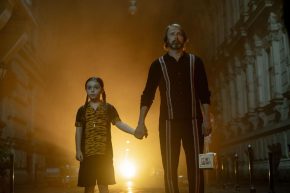
The generational contrasts are especially compelling. Jane Levy’s performance as the daughter-in-law is luminous, quietly powerful, and completely truthful – she navigates marital strain and the weight of her in-laws’ expectations with a grace that never feels staged. David Strathairn, as her father-in-law, provides a kind of moral and emotional compass. He exudes purity, simplicity, and understated warmth, anchoring the film in a gentle, thoughtful center. The chemistry between Levy and Strathairn is subtle but electric, a masterclass in emotional nuance. Celia Weston, meanwhile, as the mother, balances sharp expressiveness with softness, similarly to Will Pullen portraying her son, adding depth and texture to the family portrait.
Patti, the daughter of this elderly couple, carries a heavy, complicated life too. Already a mother to a ten-year-old, she struggles in a toxic, abusive marriage, repeatedly leaving and returning, promising to start anew each time, and relying on her parents for support. Anna Camp delivers a remarkable, playful yet heartbreaking performance as Patti. Her story gently raises questions about the granddaughter’s upbringing and how cycles of pain and care might shape her as she grows.
Highs, Lows, and Musical Grace
The movie opens with a kitchen scene: an early morning French liturgical hymn drifts through the neighborhood, sung by a mysterious woman on the street. It wakes the town and, more importantly, sets the tonal heartbeat for the film. The father-in-law and daughter-in-law delight in the song, while everyone else huffs and puffs, instantly revealing something about them: attentive, curious, and quietly alive to the small wonders around them.

MacLachlan returns to this musical motif at key moments, especially in scenes that explore reflection, art, and moral contemplation. Greg Danner’s score, his first major credit, is understated but precise, moving through scenes with the same gentle rhythm as the characters’ lives. Cinematographer Scott Miller deserves special mention. Despite a modest $1.3 million budget, he captures interiors, backyards, and riverside panoramas with an effortless elegance. The light is consistently natural and white, never drifting into the yellow tints that dominate so many contemporary indies – I loved that choice. The framing is deliberate yet organic: a conversation at the office, a reflective moment by the museum, or the garden between the two neighboring houses – all communicate intimacy, social texture, and family history without a word.
Conflict Without Condemnation
MacLachlan’s approach to morals and tension is particularly refreshing. Characters behave imperfectly: a son repeatedly cheats on his wife, struggles with addictions and becomes violent – yet is met with firm but kind boundaries from his family. The film doesn’t excuse harmful behavior. But it also never reduces people to simple villains. Instead, it invites us to look at context, history, and the ways upbringing and personal struggles ripple through our lives. And yet, it’s clear we’re all responsible for how we act – and for the effect we have on the people around us. It’s an examination of ethics in miniature, the kind of small-scale moral navigation that feels more relevant and human than grand, cinematic melodrama.

Dialogue is sharp, alive, and often funny, especially in the interplay between the high-pitched critical energy of the son and mother and the calmer, low-pitched, steady exchanges between the father-in-law and daughter-in-law.
Parenthood is at the heart of A Little Prayer, not just as a backdrop but as a lens through which we understand human behavior and our responsibilities to others. The parents’ reflections on their children’s choices echo their own past mistakes and inherited patterns. MacLachlan explores the ripple effects of our actions, the delicate balance of empathy, accountability, and love. He shows that reflection is never neat or conclusive – it’s ongoing, messy, and essential. The film also quietly asks: when, why, or how should we have a say in our adult children’s lives, if at all?
A Little Prayer is currently streaming on Prime Video and Apple TV.
~ by Dora Endre ~





Comments