





Solomamma: The Danger of Seeking All the Answers
The “sperm donor story” has become a well-trodden path in cinema, but Norwegian director Janicke Askevold’s feature debut, Solomamma, manages to strip away the genre’s tired tropes to offer something far more raw, uncomfortable, sweetly funny and human. Premiering at Locarno to critical acclaim, this film isn’t a tidy drama, it is the portrait of a woman reaching a breaking point, captured with a refreshingly non-preachy, clinical eye.

The film introduces us to Edith (played with fierce, magnetic intensity by Lisa Loven Kongsli), a journalist and single mother living under crushing weight of responsibility. She is not just raising her young son, Sigurd, alone, she is simultaneously acting as the primary caregiver for her mother, who is slipping into the darkness of dementia. When a routine trip to the kindergarten highlights her son’s growing curiosity about his absent father, an up-in-your face kid keeps on nagging little Sigurd to tell her more about his dad, Edith’s life begins to splinter. Deprived of her own mother’s disease and loss of their shared memories, her own childhood trauma of an absentee father, and desperate to ground her son’s identity, Edith spirals into a frantic, obsessive search for the sperm donor’s biological origins. She wants to know who he is, and through that: who her son is. What did he potentially inherit from his father? His blue eyes? ADHD? Bipolar?

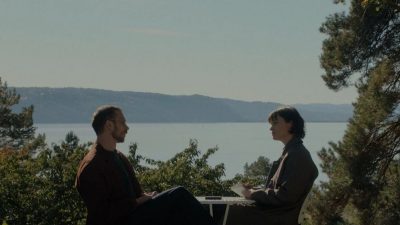
What follows is an ethically questionable journey. Once Edith discovers the identity of the donor – a game developer named Niels (Herbert Nordrum) – she approaches him under the guise of an investigative journalist. She visits him in his home. I repeat, in his home. Girl, what a horrible idea! We watch Edith weave her web of lies, it becomes clear she is killing her professional reputation and her sanity to satiate a curiosity that borders on the catastrophic. Sometimes, I couldn’t look at the big screen – I could tell that drama was meant to strike!

The film’s greatest strength is its refusal to paint anyone as a villain. Everyone – from Edith’s circle of friends to the sperm donor’s own family – is simply trying to exist, trying to love, show support and trying to navigate the messy realities of modern relationships. The chemistry between Kongsli and Nordrum (known primarily for his brilliant performance in The Worst Person in the World) is the engine that drives the film. Once Nordrum enters the frame, the screen crackles with electricity, and their shared scenes – whether dressing up as a woman at a home party or nursing hangovers after a night of impulsive tattooing – feel like a masterclass in Meisner’s repetition exercise, and overall in screen acting.
Visually, cinematographer Torjust Thesen captures the story with a distinct, “Norwegian wave” aesthetic. Much like the recent, psychologically intricate Loveable (dir. Lilja Ingolfsdottir), Solomamma uses a palette of soft pastels and lifelike, intimate framing to ground the heavy emotions in reality. The film is refreshingly free of cliches, relying on natural, vivid dialogue that captures the often zigzagging logic of a person under extreme emotional pressure, which they have to face alone.
However, by the time we get close to the end credits, the film’s narrative commitment to Edith’s “catastrophic” choices gets quite taxing. There are moments where her behavior feels so undeniably reckless that it is difficult to maintain empathy, and one cannot help but side with poor Niels, the man unknowingly dragged into a full-on crisis. It is a bold choice to anchor a film on a protagonist who seems to be running like a headless chicken without looking around, but it also makes the film even more thought-provoking.

By the time the credits roll, Askevold hasn’t given us any easy answers about adoption, donation, or what it means to be a “whole” person. Instead, she leaves us with a series of difficult questions about our own responsibilities and the nature of the families we build. It is a gorgeous, painful, and deeply intelligent piece of cinema that demands to be seen – and then debated – with a friend.
Solomamma is now available to rent or purchase on Apple TV or Prime Video.
~ by Dora Endre ~




Comments