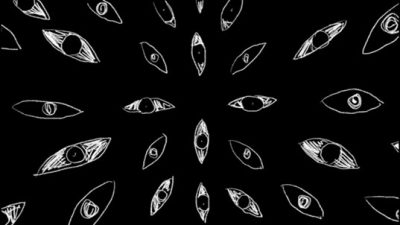
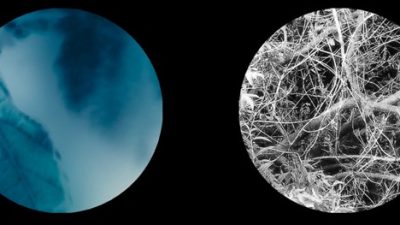

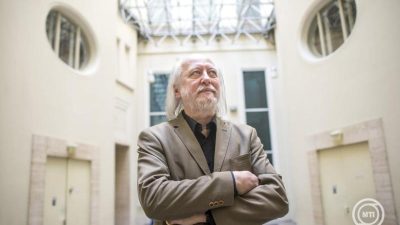


Have you ever looked at a childhood photograph and wondered if you are actually remembering that raspberry-fueled moment from your first ever summer holiday itself, or if you’ve just memorized the big adventure story your family told you about it? How much can we really trust the narrative of our own past when time, perspective, and emotion constantly blur the edges?
This shifting nature of memory is at the heart of Blue Heron, the outstanding 2025 feature debut from Canadian writer-director Sophy Romvari. Distributed by Janus Films, this deeply sensitive film serves as a culmination of the investigative work Romvari built in her previous shorts, such as 2020’s Still Processing. Blending personal immigrant histories with a brutally honest examination of family trauma, Blue Heron arrives as both a poetic time capsule and a fresh-as-the-spring-dew piece of meta-cinema.

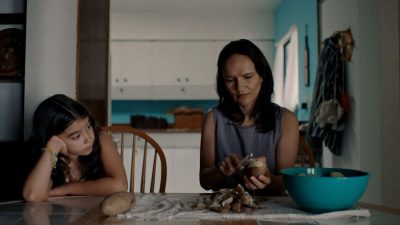
The film opens in the lush, freedom-infused backdrop of 1990s Vancouver Island, where an immigrant family of six from Hungary settles into a new home. On the surface, it’s a picturesque, almost hippie-esque lifestyle spent close to nature. Yet, beneath the serene surface, the family’s equilibrium is gradually thrown off-balance by the disruptive behavior of the eldest son, Jeremy (Edik Beddoes). One moment, he is present and warm, sprinkling flour on his siblings to make them laugh; the next, he pretends to be dead on the front steps for hours or disappears during a family outing without a trace.

We experience this vivid but tense summer through the eyes of the youngest daughter, Sasha (Eylul Guven)-a cinematic semi-alter ego for Romvari herself. Jeremy’s escalating anxieties manifest in frightening, erratic acts: keeping a canister of petrol in his bedroom, threatening to burn the house down, stealing bikes, and getting caught by the police for trespassing. Sasha never really knows when the right moment is to connect with him-or if there even is one. Yet, she profoundly yearns for that experience, that long conversation, that hug-even as an adult.
What makes Blue Heron so achingly real is its refusal to judge any of its characters. Jeremy’s problem is never named because the family never receives a proper diagnosis. They are a family lost in limbo, surrounded by question marks-helpless, scared, and anxiety-ridden, entirely abandoned by “the system.”

We watch them navigate a crisis in the dark-a reality made even more authentic by the raw, natural performances of the young cast (many of whom are immigrant children living in Canada from Croatia, Kyrgyzstan, and Turkey) and the parents (played with exceptional warmth and strain by Iringó Réti and Ádám Tompa), who naturally pivot between Hungarian and English depending on the emotional sensitivity of the moment.
Visually and aurally, the first half of the film is a masterclass in atmosphere. Cinematographer Maya Bankovic and editor Kurt Walker use a meticulously planned mix of digital footage, 16mm film inserts, still photographs, and muted pastel palettes that pull viewers into a whirlwind of nostalgia. With 30% of the film’s budget, crew, and post-production (including the amazing sound design) coming out of Budapest, the textured production design by Victoria Furuya and costumes by Maria Katarina make the ’90s backdrop feel intimately tangible.

The way the film uses music, sound effects, and visual details reveals jaw-droppingly mature and confident direction. We hear a blend of original score and classical compositions (such as Beethoven), bird calls curated authentically to the location and era, and we see the mother reading a book titled Change early in the film – a concept that quickly becomes a strong motif and a frequently cited wish throughout the movie.
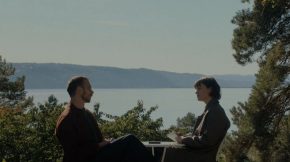
Then comes the film’s structural pivot. Midway through, Romvari breaks the traditional narrative wall, jumping into the present day to transform Blue Heron into a delicate, journalistic investigation. The adult Sasha steps into the frame, sitting around a roundtable with real-life child psychologists and social workers to assess her family’s 20-year-old case file.

The film shifts into a critique of how state social services and healthcare systems consistently fail families dealing with undiagnosed children, leaving parents with virtually no guidance. In one of the film’s most memorable, meta-cinematic sequences, the adult Sasha travels back in time to Vancouver Island, literally knocking on the door of her childhood home and entering her past life disguised as a social worker to spend time with her own family.
This structural shift is where viewers might find themselves slightly torn. While the investigative sequence begins with brilliant intellectual momentum, parts of the second half do begin to drag, occasionally feeling a bit too self-indulgent.

Yet, the emotional heart of the film remains unassailable. Having lost two older brothers in real life, this young filmmaker approaches her story not with remorse or bitterness, but with a deep desire to understand. As Sasha keeps on discovering pieces of the puzzle – such as unexpected text messages from Jeremy’s old school friend Elijah, revealing facts she could never have known – she comes to an important realization: memory is inherently subjective. We cannot trust our own recollections entirely because memory is constantly changing, reshaped by time and perspective.
Blue Heron is a beautifully brave, lyrical experiment in healing through the lens of a camera. Romvari’s father is a trained DP who ended up photographing and filming every moment of their family’s life, and that passion for the camera – the naturalism in capturing fleeting moments and subtle details-clearly had a strong impact on Sophy.
The film is currently wrapping up its summer 2026 European theatrical run. If you miss it on the big screen, it is available to rent on Prime Video and Apple TV, or streaming on The Criterion Collection (where it is free with ads, alongside Romvari’s acclaimed short film Still Processing).
~ by Dora Endre ~


Comments